Kiosk, Counter or Kitchen Table: What a 6x4 Photo Really Costs in the UK in 2026
Photo: PattayaPatrol, CC BY-SA 4.0, via Wikimedia Commons
There's a particular kind of optimism involved in printing photos at home. You've got a decent printer, a pack of glossy paper and forty pictures from a weekend in Whitby. An hour later you have thirty-two prints, three smudged ones, a paper jam and a head-clean cycle that sounds like a coffee grinder.
None of that means home printing is a bad idea. It means the cost per print is never the number you hoped it was. So let's do it properly, in 2026 money, and see where each option actually wins.
Home printing: what a 6x4 really costs
Break it into three parts.
Paper. Own-brand 6x4 glossy packs run about £12–£18 for 100 sheets, so 12–18p each. Premium branded paper — the stuff that matches your printer's own ink — sits nearer £20–£25 per 100, or 20–25p a sheet. Thin paper curls, cheap paper dulls colour, so this isn't the place to shave pennies.
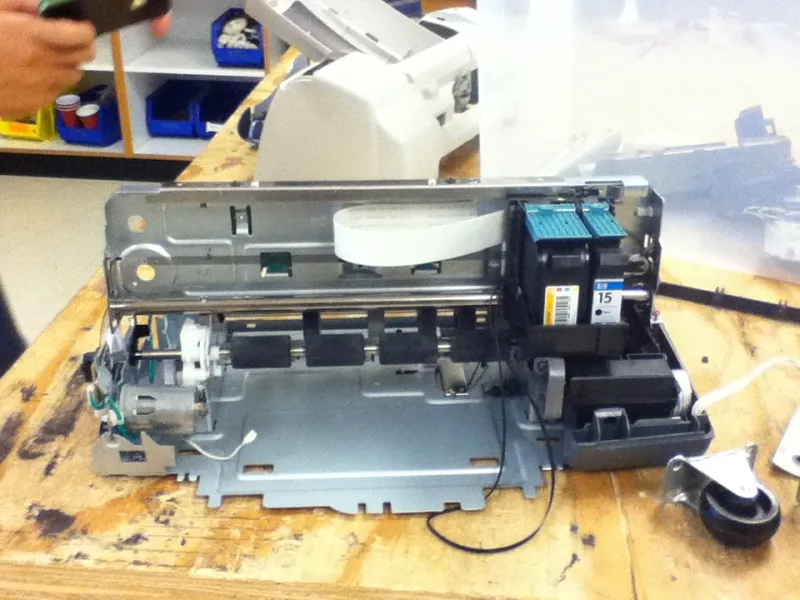
Ink. This is the variable nobody quotes. A borderless 6x4 on a six-ink photo printer with individual tanks costs roughly 10–18p in ink. The same print on a budget all-in-one with a tri-colour cartridge can cost 25–35p, because photo printing hoovers up colour and those carts hold very little of it.
Waste. The honest bit. On a batch of thirty prints you'll usually get two or three that miss the crop, come out too dark or get a roller mark. Add a head clean before you start and a second one when the banding appears, and you should add 15–25% to your per-print figure.
So a realistic home 6x4 lands somewhere between 30p and 55p. Not terrible. Not 20p either.
The high street in 2026
Supermarket and pharmacy kiosks — Boots, Tesco, Asda and the like — are still the default for a quick batch. Walk-in instant prints of a 6x4 typically sit at 29–49p. Order the same prints online for collection at the same store and the price often halves: 15–25p, ready in a couple of hours.
Staffed photo counters such as Snappy Snaps or Max Spielmann charge more for the convenience and the conversation — think 40–70p for instant, with next-day service cheaper. Their value isn't the unit price, it's the person who knows why your photo came out orange.
Instant machines also have a habit of auto-correcting everything. Skin tones get warmed up, skies get pushed a bit blue, and your carefully composed shot comes back looking like a holiday advert. Fine for the fridge door. Less fine for a framed print.
Online labs: cheapest per print, slowest to the fridge
Photobox, CEWE (often routed through Boots), Snapfish and the various free-print offers work on volume. At 30+ prints, 6x4s commonly come in at 9–20p each, plus £2–£5 delivery. The free-print promotions usually require 30–50 prints and payment for postage, which typically lands around 10–15p per print all in.
The catch is time. Two to five working days means a birthday that was last Saturday. Royal Mail doesn't do same-day nostalgia.
If you're printing a whole wedding, a christening or a year's worth of phone photos, this is the cheapest route by a clear margin — and the prints are silver-halide, which brings us to fading.
Quality: where home wins and where it doesn't
Home printing is only as good as the printer behind it. A cheap all-in-one with a tri-colour cart and plain-ish paper will produce muddy shadows, visible banding and weak blacks. It's fine. It isn't a photo.
A proper five- or six-ink photo printer with matched paper is a different animal — better gradation, deeper blacks, and if you use the right ICC profile and let the printer manage colour, genuinely exhibition-quality results. That combination beats most kiosks, which are built for speed and heavy auto-correction.
Online labs sit in the middle: consistent, professional, occasionally a touch dark or flat if your monitor is running too bright. A five-minute screen calibration does more for your prints than an upgrade ever will.
Fading, framing and the twenty-year question
Dye-based inks on ordinary paper fade noticeably within a year or two in direct sunlight; stick one in a sunny kitchen window and watch it happen. Pigment inks — the sort used in Epson's Claria and Canon's Lucia families — are rated for decades, but only in album conditions. Behind glass in a bright room, that number drops sharply, and glass without UV filtering can concentrate light rather than block it.
Kiosk and lab prints on silver-halide paper are the archivists of the group, comfortably outlasting a home dye print. If the photo is going in a frame for a grandparent, that matters more than the 15p difference.
The A4 wrinkle
A4 is where home printing claws back ground. Ink for a full A4 photo runs £0.90–£1.60 depending on the printer, plus 50–90p for decent paper — call it £1.50 to £2.50 all in. High-street A4 prints are typically £3–£6, and online labs sit around £1.50–£3. Suddenly the kitchen table looks competitive, because 6x4s are where labs are most efficient and A4 is where they're not.
So when does buying that photo cartridge pay off?
Run the numbers honestly. If a kiosk print costs you 35p and home printing costs 30p, you save 5p a print. To recover the cost of a £130 photo printer you'd need 2,600 prints. Even at a generous 20p saving, you're looking at 650 prints just to cover the hardware, before you've bought a single extra ink set.
Which means: don't buy a dedicated photo printer to save money on 60 prints a year. Buy one because you want control, because you print in small batches as you go, because you want borderless or fine-art paper, or because the photos are nobody else's business.
Home printing wins on immediacy, control and privacy. It wins on A4. It rarely wins on pure cost per 6x4 — and if you already own a printer, a decent pack of paper and a fresh set of cartridges will get you most of the way there for a fraction of the outlay.
Print the forty Whitby pictures. Just buy the paper when it's on offer, and don't expect the ink to be free.