Boxes, Bubble Wrap and a Kitchen Roll: Moving an Inkjet Without an Ink Disaster
Moving house gets planned with military precision. Every box is labelled, the kettle travels in the car, and somebody has been nominated to guard the biscuit tin. Then there is the printer — usually scooped up at the last minute, balanced on a passenger's knees, and plugged in three days later to a nasty surprise.
An inkjet is a heavy, awkward box full of liquid. Give it an hour of proper thought and it behaves itself. Here is how we would handle the handover.
Before you tape anything: is it actually coming?
Be honest with yourself while the machine is still on a table rather than in the back of a van. Ask three questions.
- Does it still print cleanly, or have you been putting up with stripes for six months?
- Can you still buy cartridges for it easily, and at a sensible cost per page?
- Will the new place have room for it — and a socket near enough?
If the answer to the first two is no, moving it is just carrying a problem to a new address. That does not mean bin day. Working printers are wanted on Freecycle and local social groups within hours, charity shops will sometimes take one with a spare set of inks, and anything genuinely dead goes to a council household waste site or a retailer's recycling point rather than the wheelie bin.
The cartridge question most people get wrong
There is no single right answer, and anyone who tells you otherwise has not read enough manuals.
Short journey, same day: leave the cartridges in, close every latch, and tape the lids shut. Ink sitting in the printhead keeps the nozzles from drying out, and re-seating cartridges in a strange kitchen with poor light is how people bend contacts.
Long journey, storage unit, or a gap of days before you can plug in: take them out. Bag each one individually in a zip-lock, keep them upright, and store them somewhere that stays cool. A cartridge left in a van through a July afternoon or a January night is a cartridge you should not trust afterwards.
Either way, do not shake cartridges to 'check' them, and do not wipe the printhead with a baby wipe.
Packing it so it arrives as a printer
The original box with its moulded inserts is unbeatable. If that went to the tip in 2019, build your own equivalent.
- Remove all paper from the tray and the feed slot.
- Tape the scanner lid, the output tray and any fold-out flaps.
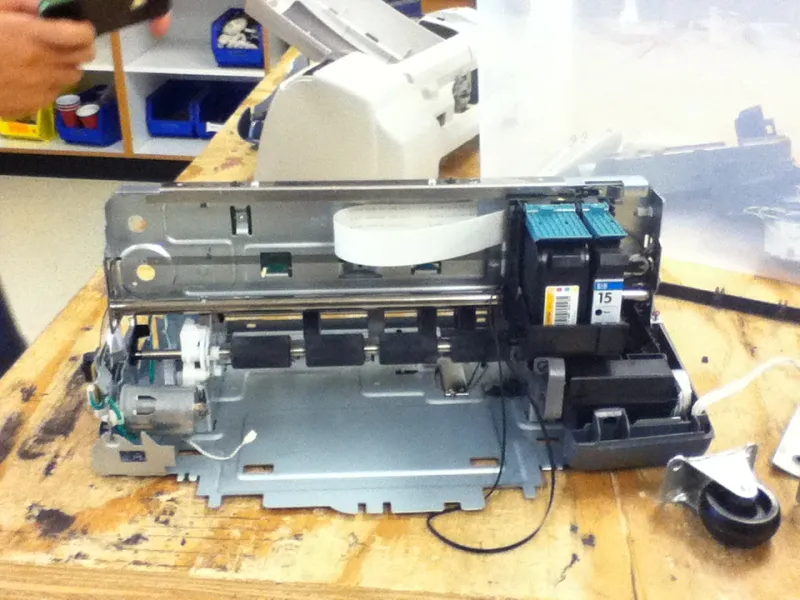
- Secure the carriage. Some models have a genuine transport lock you slide into place; others need a strip of low-tack tape over the carriage to stop it sliding. Never force anything — if it resists, stop and check the manual.
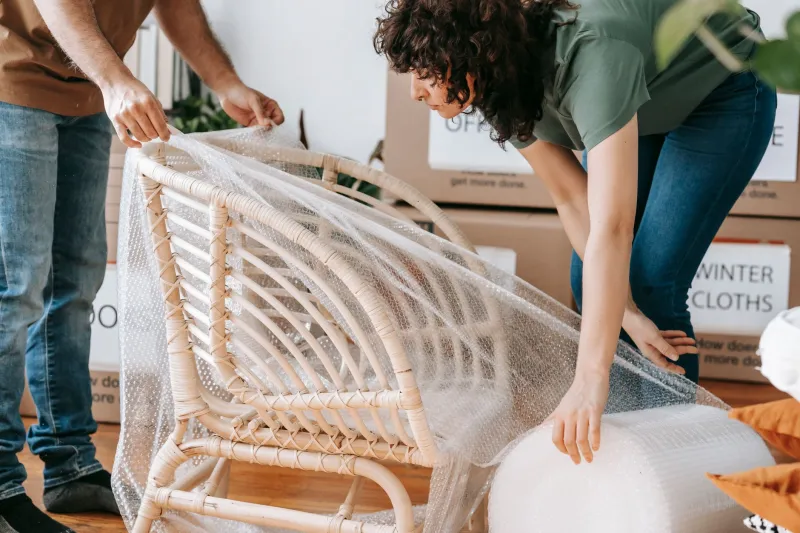
- Wrap in bubble wrap and box it upright. Arrows and a strip of masking tape saying PRINTER help more than you would think.
- Keep it upright in the van. Lying a printer on its side sends ink into the mechanism and the waste pad, and that is how you end up with a machine that permanently smells of cyan.
Tuck a roll of kitchen roll in the box. You will want it.
Spare cartridges: the forgotten cargo
Most households have a drawer of half-used and unopened cartridges. Sealed ones stay sealed, upright and labelled with the date they went in the box. Bag any part-used ones separately — a leaking cartridge can ruin a sealed one next to it. Do not stack the heavy book box on top of them, and do not leave them in the glovebox.
On arrival: resist the urge to print instantly
If it has travelled in a cold van, let the printer stand in its new room for a couple of hours before switching on. Condensation inside a machine that has just come in from 2°C is not a friend to electronics or printheads.
Then unpack, check the carriage for stray ink, refit cartridges if you removed them, and run a nozzle check pattern rather than firing off a photo. One or two head cleans are fine if the pattern shows gaps. More than that is just burning ink; if it is still patchy, leave it overnight and try again in the morning.
New house, new habits
Where you put the printer matters more than people expect. A windowsill gets direct sun and wild temperature swings. A shelf above a radiator bakes it. A cold spare room in an older UK property can be genuinely damp in winter. Aim for a stable, dry spot at roughly room temperature, with a bit of clearance behind for cables and airflow.
The handover checklist
- Decide keep, sell or donate before removal day
- Remove paper; tape lids, trays and flaps
- Lock the carriage or tape it gently
- Cartridges in for short trips, out and bagged for long ones
- Box upright, marked, and never on its side
- Let it acclimatise before the first print
- Nozzle check first, photo later
Get those right and the printer stops being the thing you swear at in a new house. It just becomes the thing that prints the council tax letter you forgot to redirect.