Your Cover, Your Cartridge: The UK Warranty Truth Behind Compatible Ink
Photo: printer warranty documents ink cartridge desk home office UK, via i5.walmartimages.com
There’s a sentence that gets passed around UK kitchens, offices and forum threads like a warning label: “Using compatible ink voids your printer warranty.” It sounds official. It often arrives via a support agent, a sticker inside the cartridge bay, or a comment under a deal post. But is it actually true?
The short answer is: not automatically. The longer answer involves the difference between a manufacturer’s guarantee and your statutory rights, what a printer maker can reasonably prove, and why a little documentation turns a shouting match into a boring email exchange.
This is general information, not legal advice — but it’s the practical version UK buyers need before a compatible cartridge turns into a support saga.
First, separate the guarantee from the law
When a printer maker talks about its “warranty”, it usually means a commercial guarantee: a voluntary promise to repair, replace or refund within a set period, subject to conditions. That sits on top of your statutory rights, not instead of them.
In the UK, the Consumer Rights Act 2015 gives consumers rights against the retailer when goods are not of satisfactory quality, not fit for purpose, or not as described. Those rights apply to the printer you bought, and they are not cancelled because a manufacturer’s guarantee uses scary language about third-party consumables.
That distinction matters. A manufacturer can set conditions on its own guarantee. It cannot use a guarantee to strip away your statutory rights or to impose a blanket ban that has no real connection to fault. If a term feels unfair — for example, “any non-branded cartridge cancels all cover forever” — that is exactly the sort of wording consumer law is designed to scrutinise.
What a printer maker can legitimately refuse
This is where the conversation gets more sensible. A manufacturer is not obliged to fix everything for free forever. If it can show that a compatible cartridge caused the problem, it can reasonably refuse a guarantee repair or ask you to pay for the work.
Typical examples would be a leaking cartridge that has damaged the printhead, a badly moulded cartridge that has jammed the carriage, or a refill that has caused electrical damage. Notice the word “show”. A blanket suspicion is not the same as evidence.
In practice, support teams sometimes skip straight to the scary line because it ends the call quickly. “Non-genuine ink voids the warranty” is easier to say than “we need to inspect the unit and determine whether the fault relates to the cartridge”. But the second sentence is closer to how a fair guarantee claim should work.
If your printer develops a fault while using compatible ink, the maker may ask reasonable questions: which cartridges were installed, when the fault started, whether you followed the instructions, and whether there are error codes. It may ask you to test with a genuine cartridge, but it should not simply declare the whole machine out of scope because a third-party box was in the tray.
The “warranty void” sticker is not the final word
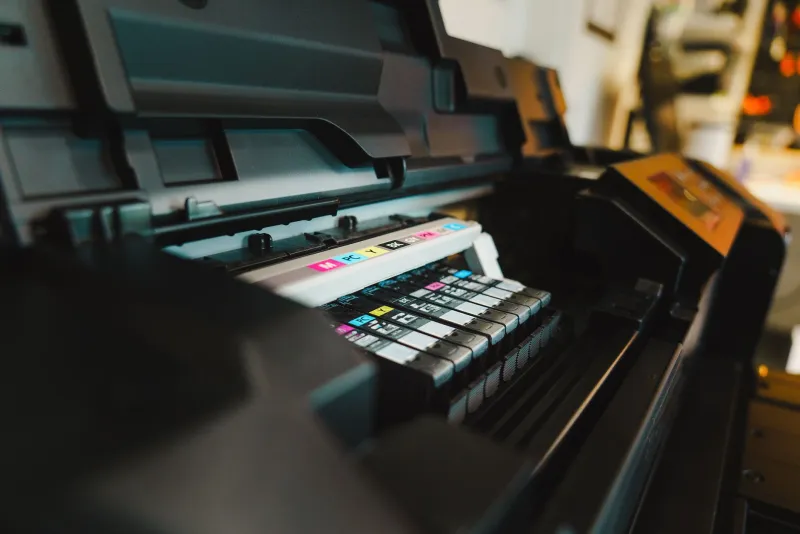
Inside some printers you’ll find a small sticker warning that damage caused by non-manufacturer cartridges is not covered. Read it carefully. “Damage caused by” is very different from “any use of”.
A fair guarantee clause might say the maker will not cover faults resulting from consumables that are not its own. That is not the same as saying the guarantee vanishes the moment a compatible cartridge is installed. UK consumer law also takes an interest in terms that are one-sided or hidden away, especially where they try to exclude liability in a broad, unclear way.
So don’t panic at the sticker. Do keep it in context. The question is not “which brand was in the printer?” but “what actually caused the fault?”
How to document a compatible-ink claim without a fight
If something goes wrong, the person with the paper trail usually has the calmer conversation. Before you ring support, gather the basics:
- The printer receipt and any guarantee paperwork.
- The exact compatible cartridge model, batch code and packaging, if you still have it.
- A photo of the cartridge label and the printer’s serial number.
- The date the fault first appeared and any error messages.
- A test page showing the problem, plus a nozzle check if the printer offers one.
- Notes from any support chat or call, including the agent’s name and the case number.
This is not about being awkward. It’s about making the claim easy to assess. If the fault is a paper feed issue, a worn roller or a firmware glitch, the cartridge is likely irrelevant. If the fault is ink leaking from a cheap compatible, the evidence will point that way too. Either way, documents beat drama.
It also helps to keep the original retailer in view. Under the Consumer Rights Act 2015, your statutory claim is generally with the seller, not the manufacturer. If the printer is faulty early on, the retailer has responsibilities. A manufacturer’s guarantee is handy, but it is not your only route.
What to do if support says “compatible ink voids it”
Ask for the specific guarantee clause in writing. Ask whether the refusal is based on a confirmed diagnosis or a general policy. Ask what evidence would be needed to show the fault was not caused by the cartridge. Keep the tone factual: “Please confirm the clause you are relying on and the inspection findings.”
If the answer is vague, escalate politely. If the printer is still within its statutory protection period, remind the retailer of your consumer rights. If the maker is relying on a blanket anti-compatible-ink rule, say plainly that you understand guarantees cannot override statutory rights. You don’t need to quote legislation at length; a clear sentence often moves things along.
And if the sums involved are small, be pragmatic. Sometimes a £30 repair or replacement cartridge is cheaper than three weeks of email ping-pong. That’s not surrender; it’s knowing what your time is worth.
The bottom line for UK ink shoppers
Compatible ink does not automatically void your UK printer cover. A manufacturer can refuse a guarantee claim if it can show the cartridge caused damage, and it can set reasonable conditions on its voluntary guarantee. But it cannot erase your statutory rights with a sticker or a support script.
So buy compatible ink with your eyes open: choose a reputable seller, keep the packaging and receipt, use the right cartridge for your model, and document any fault properly. If the worst happens, you’ll be the customer with dates, photos and a calm question — which is usually the one that gets a sensible answer.