Six Dried-Ink Rescue Myths, Ranked by How Likely They Are to Wreck Your Printhead
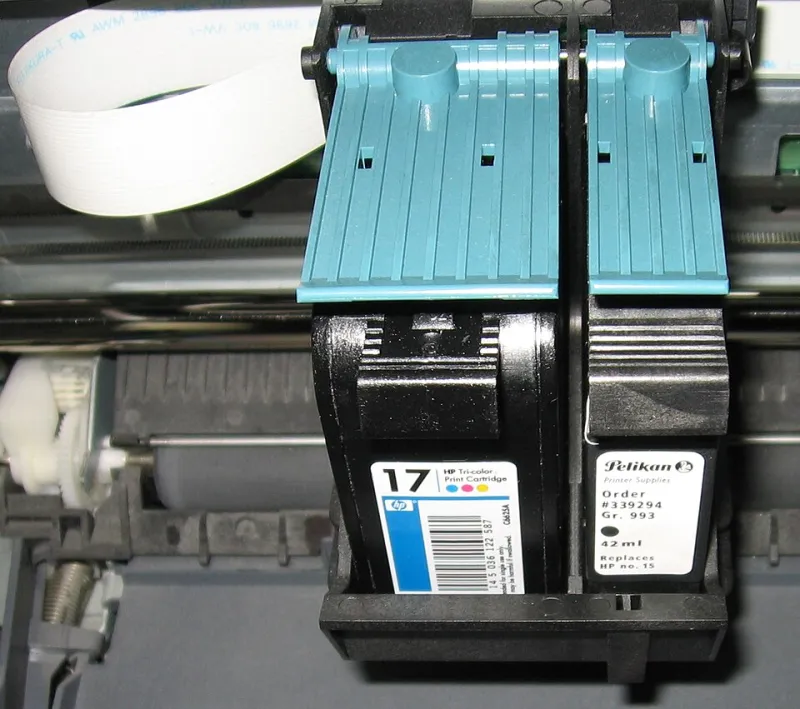
Photo: Julo, Public domain, via Wikimedia Commons
There is a certain kitchen-table optimism that takes hold when a printer starts leaving white stripes through every document. Surely, we think, there is a household remedy for this. Surely a bag of rice, a bowl of warm water or a quick blast with the hairdryer can coax the ink back to life.
Sometimes that optimism is harmless. Sometimes it is expensive. Dried ink is not a hangover or a houseplant in need of a drink; it is solvent loss and pigment or dye deposits sitting exactly where you do not want them. Most rescue myths aim at the cartridge body rather than the nozzles, which is a bit like trying to fix a blocked tap by warming the water tank.
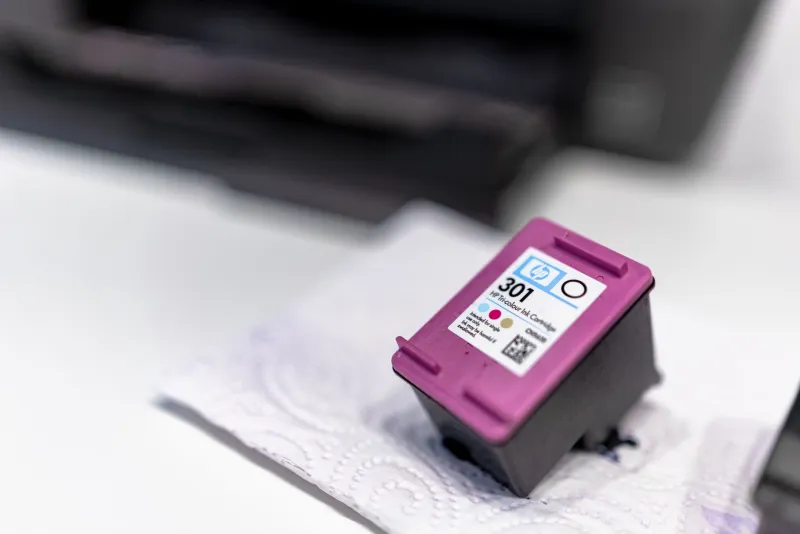
We kept our testing deliberately modest. One tired colour cartridge, one black cartridge that had been sitting in a drawer since spring, a printer that had been working perfectly well before the experiment, and a stack of kitchen roll. We judged results on nozzle checks and whether the printer threw an error, not on wishful thinking. We did not put anything near a printer still under warranty, and we would strongly suggest you do the same.
Here are the six most common dried-ink rescue myths, ranked from most likely to cause real damage to least likely. Remember that 'least bad' is not the same as 'good'.
1. The hairdryer and radiator treatment: fastest route to a dead printhead
Risk: high. Reward: almost none.
This one turns up constantly: warm the cartridge gently with a hairdryer, or sit it on a radiator for ten minutes, and the dried ink will loosen. In practice, heat is one of the worst things you can apply to a modern inkjet cartridge. The nozzle plate is delicate, the adhesive seals are not designed for repeated hot-cold cycling, and the remaining ink can dry harder and faster. On some cartridges, heat can warp plastic just enough to stop the cartridge seating properly.
A radiator is not gentle, either. It is a dry, uncontrolled heat source that can cook the ink while you are waiting for a miracle. If the cartridge is already marginal, you may get one faint page before the printer reports a failure. That is not a rescue; that is an obituary with extra steps.
Verdict: skip it. If a cartridge needs heat to print, it needs replacing.
2. The freezer, and its milder cousin the fridge: cold comfort, wet consequences
Risk: high. Reward: near zero.
The theory is that cold stops ink drying out. It does not. A cartridge is not a bag of peas. The freezer introduces condensation when the cartridge comes back to room temperature, and that moisture can sit around electrical contacts and seals. Ice crystals can also disturb the internal pressure balance. Even the fridge, which is less extreme, creates a damp cartridge that you then have to dry before it goes anywhere near your printer.
If you have ever taken a cold bottle out of the fridge on a humid day, you already know the problem. Water appears on the outside. Inside a cartridge, that is the last thing you want.
Verdict: do not refrigerate or freeze ink cartridges. Store them cool, dark and upright, not cold.
3. Alcohol wipes: good for contacts, bad for nozzles
Risk: medium. Reward: low.
Isopropyl alcohol has a reputation as a universal cleaner. It can be useful on electrical contacts if the printer manufacturer specifically advises it, and only on the contacts. It is not a nozzle-clearing miracle. On the printhead face, alcohol can attack protective coatings, dry out the surrounding plastic and turn a soft ink plug into a harder, more stubborn deposit. Scrubbing with a wipe can also drag grit across the nozzle plate.
We tried a small wipe on an old cartridge's contact pads only. The printer recognised it again, briefly, but the nozzle check was still patchy. That is the pattern with alcohol: it may solve an electrical handshake problem, but it rarely solves dried ink.
Verdict: keep alcohol away from the nozzle surface. If you use it at all, use it sparingly on contacts and let everything dry completely.
4. The warm-water bath: occasionally works, usually on the wrong cartridge
Risk: medium to high. Reward: sometimes, in narrow circumstances.
Warm water can soften dried ink on a removable printhead, which is why the method persists. But most UK home inkjet cartridges sold today have the printhead built into the cartridge. Dunking one of those is a bad idea: water and electronics do not mix, and tap water in hard-water areas leaves mineral deposits that can clog things further.
If you have a printer with a separately removable printhead, and the manual says it can be cleaned, lukewarm distilled water and a very gentle approach may be worth a try. No boiling water. No scrubbing. No wet contacts. Dry it thoroughly before refitting. Even then, this is a last-resort measure for a printhead you were considering replacing anyway.
Verdict: not a general cartridge rescue. For most people, it is a faster way to destroy a cartridge than to save one.
5. The rice bag: absorbs humidity, not hope
Risk: low. Reward: zero.
Rice is excellent at absorbing ambient moisture in a small container. It is not excellent at pulling solvent out of a sealed cartridge or dissolving dried ink inside a nozzle. The cartridge's ink chamber is not open to the air in the way a phone's internals might be. A rice bag mainly gives you starchy dust and a false sense of progress.
We left a cartridge in rice overnight. The nozzle check was identical the next morning. The rice, at least, was unharmed.
Verdict: save the rice for dinner. This is a waste of time, not a danger, but it is still a waste of time.
6. The firm shake: the least bad, still not a cure
Risk: low if gentle. Reward: temporary at best.
A gentle swirl or shake can redistribute ink inside a cartridge that has been sitting for a while. That is the only reason this myth survives. But violent shaking foams the ink, forces it towards the contacts and can cause leaks. If you try it, keep the cartridge upright, wrap it in kitchen roll and use a slow wrist movement rather than a cocktail-shaker performance.
Verdict: harmless if done gently, but do not expect it to clear a genuinely clogged nozzle. It buys you a page, not a solution.
What actually works before you reach for the rice
Start with the printer's own maintenance menu. Run a nozzle check, then one cleaning cycle. Print another check. Repeat once more if needed, but do not spend an afternoon forcing cleaning cycles; they waste ink and can flood the printhead. Check that you have removed any vent tape from a new cartridge, and make sure it is seated properly.
For day-to-day prevention, print a small page once a week rather than leaving the printer untouched for months. Store spare cartridges upright in a cool, dark cupboard, not on a sunny windowsill or in a shed. Keep them sealed until you need them. If you live in a hard-water area, do not use tap water on any part of the printer that touches ink.
The UK verdict: rescue by arithmetic, not folklore
A dried cartridge is a cost decision as much as a technical one. If it is a cheap compatible cartridge that has been sitting around for months, replace it. The time and risk are not worth it. If it is a genuine cartridge that was working recently and has plenty of ink left, try a nozzle check and one or two cleaning cycles before anything more adventurous. If the printer is under warranty, avoid home remedies entirely; the warranty small print is rarely sympathetic to warm-water baths.
The most reliable ink rescue is not in your kitchen. It is a spare cartridge in a drawer, stored properly, plus a weekly test page that stops drying from becoming a crisis. The rice bag can stay in the pantry where it belongs.